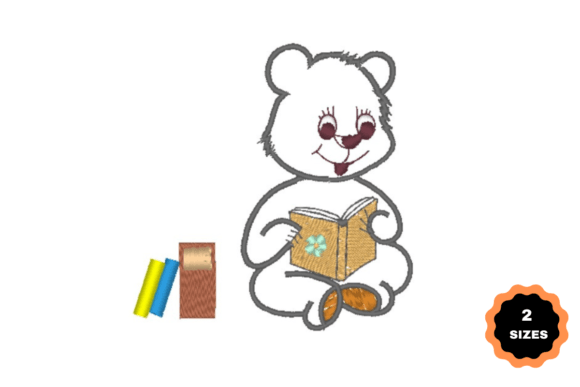
Bear Studying: A Designer’s Review for Craft Fair Success
As an embroidery designer who has spent countless weekends behind a booth table, I know that not every machine embroidery design is created equal when it comes to sales. Some designs look beautiful on a screen but fail to catch the eye in a bustling market environment. Today, I am reviewing Bear Studying, a charming addition to the Teddy Bears category, specifically through the lens of a craft fair seller and handmade shop owner. If you are looking to expand your inventory with items that evoke nostalgia and warmth, this design warrants a close look.
First Impressions: The Mood and Market Fit
The title Bear Studying immediately conjures a specific aesthetic. It suggests a scene that is quiet, focused, and undeniably cute. In the current market, we are seeing a strong trend toward "cozy academia" and whimsical, storybook-style decor. This design fits squarely into that niche. It does not scream for attention with neon brightness; rather, it invites the viewer to lean in and appreciate the detail. For a craft fair product, this is a double-edged sword. It may not stop traffic from twenty feet away like a bold geometric pattern, but it creates a moment of connection for customers who pause at your table.
The description notes that this adorable embroidery will give your fabrics an extraordinary look. From a professional standpoint, I interpret this as a design that relies on character rather than complexity. It is likely a soft, decorative piece that works best when it feels integrated into the fabric, rather than sitting heavily on top of it. This makes it ideal for sellers aiming for a premium, handmade quality rather than mass-produced novelty.
Product Applications: Where Bear Studying Shines
To maximize sales, you must place the right design on the right product. Based on the theme of a teddy bear engaged in study or reading, here is how I would deploy this embroidery file in a real-world booth setup.
- Tote Bag Design: This is arguably the strongest candidate. A canvas tote featuring Bear Studying appeals directly to students, teachers, and book lovers. It transforms a simple bag into a statement piece about identity and hobbies. Ensure the design is centered and large enough to be read clearly.
- Apron Embroidery: Kitchen aprons are staple sellers. Placing this design on the bib or the lower corner adds a touch of whimsy to a functional item. It suggests a cozy home environment, which resonates with buyers looking for housewarming gifts.
- Tea Towel Embroidery: Linen or cotton tea towels are excellent low-cost entry points for customers. The texture of the towel can enhance the rustic feel of the bear, provided the stitch density is appropriate for the weave.
- Embroidered Patch: If the design holds up at a smaller scale, turning it into an iron-on or sew-on patch allows customers to customize their own jackets or backpacks. This expands your reach to younger demographics who frequent craft fairs.
- Pillow Covers and Pouches: These items allow for a more intimate viewing distance. The details of the bear’s expression and any books or accessories in the design will be appreciated here, adding perceived value to the finished product.
Production Practicalities for the Small Shop Product
When preparing for a weekend market, efficiency is key. You need designs that are repeatable and reliable. Bear Studying appears to be a design that balances detail with producibility. However, there are critical technical factors to consider before you hoop your first piece.
First, consider the stitch density. Designs with too much density can pucker lightweight fabrics like those used for tea towels or summer totes. If the design features large solid areas of color, you may need to use a cut-away stabilizer to maintain shape, especially on stretchy fabrics. Conversely, if the design is mostly running stitches or satin columns, a tear-away stabilizer might suffice for woven cottons.
Second, evaluate the thread colors. A studying bear likely involves browns, creams, and perhaps muted blues or greens for clothing or books. These earth tones photograph beautifully for your Etsy seller listings, creating a cohesive, warm aesthetic for your online shop. However, ensure there is enough contrast between the bear and the background fabric. Stitching a brown bear on a dark chocolate linen will cause the design to vanish. Always test on scrap fabric to confirm visibility.
Visual Appeal and Customer Engagement
In a crowded craft fair, your booth display strength depends on variety and clarity. Bear Studying serves as an excellent anchor for a themed collection. Imagine a display where this design appears on a tote, a matching pencil pouch, and a small framed hoop art piece. This consistency builds brand recognition. Customers are more likely to buy when they see a design applied across multiple design assets, as it shows versatility and thoughtfulness.
The emotional hook of this design is its narrative. A bear studying is inherently sweet and slightly humorous. It triggers a positive emotional response, which is a primary driver for impulse buys at handmade markets. It feels personal and curated, distinguishing your commercial embroidery products from generic big-box store items.
Careful-Use Notes and Technical Checks
Before committing to a large batch of finished product inventory, heed these practical warnings. The product description mentions that the design comes with "mu," which likely refers to multiple formats or units, but it cuts off. This highlights a crucial step: always verify the file formats included in the digital embroidery file package. Ensure you have the correct format for your machine (PES, DST, JEF, etc.) to avoid conversion errors that can distort the design.
Additionally, check the recommended hoop size. If the design is large, you may be limited to larger items like tote bags and pillow covers. If it is small, it offers more flexibility but may lose detail on textured fabrics like thick terry cloth towels. Tiny details, such as the eyes of the bear or text on a book cover, can get lost if the design is scaled down too far or stitched on high-pile fabrics.
For curved surfaces like caps, this design might require careful positioning. The "studying" pose implies a horizontal orientation, which can be tricky on the front panel of a cap. It may work better on a tote or flat pouch where the geometry is straightforward.
Final Verdict for the Creative Entrepreneur
Bear Studying is a strong contender for sellers targeting the gift, education, and home decor markets. It is not just a picture of a bear; it is a mood. To succeed with this design, focus on high-quality mockups for your online listings. Use a printable mockup service or stage real photos in natural light to show the texture of the stitches. Confirm commercial licensing terms explicitly before selling, as this varies by designer.
By pairing this design with the right fabrics and stabilizers, you can create a line of handmade product offerings that feel cohesive, professional, and deeply appealing. Test it, refine your thread palette, and let the charm of the studying bear do the selling for you.